Sunday, September 16, 2012

Book Review: Powder Room by Shefalee Vasudev

Title: Powder Room
Author: Shefalee Vasudev
Publisher:
 Random House India
Pages: 335
Price: Rs 399
Format: Hardbound
Genre: Non Fiction / Fashion
Rating: 10/10

Madhur Bhandarkar’s movie ‘Fashion’ was the first to explore what is little known to the general people, like me, of the world of fashion. But like all his other films, the characters were too unidimensional and the story was largely put together by mix-and-match of some controversial scoops from the Fashion world. There were no insights. It looked what it was – an outsider’s view of the workings of the Indian Fashion. It was high time an insider threw some light.

I first read about this book here, and I was hooked. Fashion is such a fascinating subject. Moreover, I had a ‘Fashion Designer’ phase while growing up, so I am pretty well-versed with a lot of fashion designers and models. I think Sushmita Sen winning the coveted Miss Universe title was a defining moment for Indian Fashion industry. Atleast my generation, which was still in school, took notice of this field. I even had a ‘Fashion Journalist’ phase. But today in retrospect, I am glad I did not become either.  I am not cut out for the Fashion world. I hardly care about clothes now (I mean the latest trend and not wearing!).

‘Powder Room’ by Shefalee Vasudev, an ex-Marie Claire editor and a journalist for 15 years writing on popular culture, social trends and fashion, attempts to offer a 360 degree view of the Indian Fashion industry. She interviewed 300 people within the scope of her book to understand what ‘fashion’ means to them. What came out eventually in the form of a book is an expansive view of Indian fashion industry –it takes into account how everyone perceives fashion and how fashion touches everyone and its impact, which is surprisingly far reaching and wide-spread. This book is as much about the elite class who can afford the latest luxury brands as much it is about the middle class shopper who gets a replica made for considerably low cost.

With a fetching cover page, the book is divided into ten chapters, each focusing on a distinct aspect of fashion. ‘Powder Room’ packs a lot in its 330-odd pages. Here are a few glimpses:

The famous fashion designer Raakesh Agarvwal talks about fighting his personal demons, getting overwhelmed by the downside of fashion world to getting back on track and finally getting acclaim. Jennifer, the Sales girl with a luxury brand, admits to the conflict between her middle class personal life and the professional one surrounded with luxury brands and elite customers. Ludhiana ladies make dream customers for the luxury brands in their eagerness to lap up every latest offering. The super rich splurge on designer wear but India has a huge middle class which cannot afford those expensive clothes, and thus the emergence of darzi culture.

It was also refreshing to read about all kinds of models - where there are desperate ones like Nagma, eager to do whatever it takes to make it big; there are also the practical ones like Laxmi Rana and a lot of other senior models who have learnt to draw the line and keep their sanity. There are observations about Naga culture and fashion, and surprising lack of organized retail stores in a fashion conscious state.

While Rohit Bal stands out for the luxurious clothes he creates and the dramatic way in which he presents; Sabyasachi Mukherjee also has a huge following for his clothes which are distinctive and original. He is obsessed with Indian weaves, textiles and embroideries, and goes all out to revive, sustain, contemporarize the traditional crafts. The story of Patan Patola sarees and Salvi family actually mimic the fate of a lot of original Indian weaves and crafts. Without their openness to experimentation and any unique marketing strategy to make those traditional weaves aspirational for the young generation, the art is sure to get lost in the near future. 

The fashion media consists of stylists and editors from fashion magazines on one hand, and journalists who cover fashion as a segment for the mainstream newspapers on the other hand. The former focuses on insights and latest trends while the latter thrives on controversies and scoops. And finally the much talked about fashion world politics – feuding fashion designers, multitude of fashion weeks sprouted even in B-class cities now, no clear criteria for selection of young designers for them, and many such industry specifics. Bridal wear is certainly a big business avenue for the Indian fashion world and top designers agree that no matter what they show on the ramp, they are making a lot of Indian wear for their customers.

Eventually, ‘Powder Room’ is insightful, informative, gripping and eye-opening. It gives you an all-round view, multiple perspectives of fashion world and what fashion means to different people. The author explores the “aspects of modern India through fashion”, while also offering a study on evolving fashion consciousness. Though she steers clear of the controversial topics, she does discuss the pitfalls and downside of the fashion world but gives enough examples of people who have made it and yet not lost their heads to the excesses.

I am not in a position to comment if she has done justice to the Indian fashion world, may be her contemporaries can comment better. But as far as it is about me, I had a great time reading this book. It opened surprising as well as interesting aspects of a world, which has not been too talked about in books. May be there are many more things to say but it is certainly a good beginning.

A must read for anybody interested in fashion world, fashion students as well as people who are interested in anthropology, culture and social change. It strengthens my belief that non fiction is an extremely interesting category to read.

P.S. I googled every reference that she throws in – whether people, books or articles. I also googled all those cover pages she talks about.

Image courtesy: Random House India website

Friday, September 7, 2012

Book Review: We Need To Talk About Kevin by Lionel Shriver

Title: We Need To Talk About Kevin 
Author: Lionel Shriver
Publisher:
 Serpent’s Tail
Pages: 477
Format: Paperback
Genre: Fiction
Rating: 10/10

Thought provoking, nuanced, ambiguous, horrific, dark, multi-layered, disturbing, unputdownable, engrossing, terrifying, even haunting – these are some of the words which popped into my mind while reading this extraordinary book. I often forgot that it was a work of fiction but it could have easily been a real story.

In ‘We Need to Talk about Kevin’ by Lionel Shriver, the story unfolds through a series of letters by Eva Khatchadourian addressed to her husband, Franklin. Through her candid letters, Eva tries to pursue the possible reasons that eventually led her first born Kevin to murder seven of his fellow high school students, a cafeteria worker and a teacher, three days short of his sixteenth birthday. She ruminates, evaluates, examines several incidents, feelings and experiences from before Kevin was born leading up to the present context (two years after the unfortunate incident).

In the beginning, she is taken in by the idea of having a child “for a change” but eventually when she finds that she was pregnant she did not like the idea any longer. Pregnancy felt intrusive in her personal space. Even after the baby was born, she failed to feel the connect with her newborn. She detested the changes it brought to her body and to their lives. In her letters, she candidly admits to her faults and her failings as a mother, in order to single out the reasons that eventually led Kevin to commit the unthinkable. 

She confesses to being a bad mother. When little Kevin tells her that she did not want him. In response, Eva tells Kevin that he would not want himself. All in the guise of being factual. She was also envious about Franklin's attention for the baby. The way baby responded to him and he behaved with the baby. 

She felt early on that Kevin was not an ordinary child. There was something odd about him. He was evil by birth. But she forever struggles to convince Franklin about this because Kevin is always the regular, loving, enthusiastic child in front of him. Eva believed that Kevin was a scheming, shrewed boy, not a little innocent child. The way Kevin behaves in front of Eva is almost eerie but Franklin always laughs off all such incidents. He might have been even unreasonable in convincing himself that there could not be anything wrong with his child. Eva goes up to the extent of having a second child Celia to prove (even to herself) that Kevin was certainly different and her own emotions as a mother were quite alright for the second child. A lot of times, Eva seemed even scared of Kevin.

Eva comes across as cold, proud and also vulnerable at times, but still Eva and Franklin could be any regular couple and that is what terrifies the most. This could happen to anybody!

The story telling and characterization are probably one of the best that I have ever read. This book is in the league of classics. A must-read if you are also a parent! It is the kind of book that stays with you long after you have finished it. You cannot stop thinking about it. 

It is a difficult book to read but always engaging, never slow. I cannot recommend it enough!

Image source: http://bookdepository.com

Wednesday, September 5, 2012

Book Recommendations: Books on baby development and child care

Market is flooded with child care books and like in everything else, the internet comes handy in selecting just the right one for reference. I would also suggest discussing with fellow mothers. It always helps to get recommendations from others in the same boat. And at the end of the day, follow your instincts.

What to Expect: the First Year by Heidi Murkoff (with Sharon Mazel) – This book is only for the first year of the baby, so it addresses all the issues which you might have during the first year, and at 800 pages is pretty exhaustive in exclusively addressing the first year of a baby’s development and care.
It is divided into 4 Parts:
Part 1. The First Year – This gives you month by month account of a child’s development, what to expect each month and various issues one might face, for example, feeding issues, colic, baby necessities, child-proofing, etc.
Part 2. Of Special Concern – This chapter deals with concerns like baby’s health in changing weather, planning for travel, when baby is sick, most common health problems, first aid do’s and don’t’s, special needs baby, adopted baby, etc.
Part 3. For the Family – Concerns of a new mother, notes for father, when you have an older child at home
Part 4. Ready Reference – It contains baby’s first recipes across months according to his development, Common home remedies and Common childhood infections.
This book is pretty detailed and extremely useful for the first year, but it will be almost redundant after that.

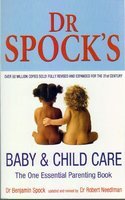
Dr. Spock’s Baby and Child Care – Another favourite with new parents, this book will be handy till the time your child is 18 years. It is divided into 6 sections:
Section 1. Your Child, Age by Age: It covers all aspects from before your child is born till the time he is eighteen years of age
Section 2. Feeding and Nutrition: From Breastfeeding to starting solid foods and addressing eating disorders; the chapter focuses on the food-related issues and nutrition.
Section 3.  Raising Mentally Healthy Children: Emotional needs, balancing children with work, discipline, sexuality, stresses – are some of the issues addressed in this chapter
Section 4. Common Developmental and Behavioural Challenges: Sibling rivalry to annoying habits, toilet training to therapies – this chapter focuses on the behavioural challenges in children and how to address them
Section 5. Learning and School: This chapter covers the areas related to school, from starting to various problems faced by school going children.
Section 6. Health and Safety: General medical issues, immunizations, overall health and common childhood illnesses; are part of this chapter
Of course, since this book has a wider scope, diverse topics have been touched upon. It has been a good reference book so far.

Raising Boys: Why Boys Are Different – How to Help Them Become Happy and Well-Balanced Men – Let’s face it, girls and boys are different, their inherent natures and tendencies are usually different. A mother, most of the time, is the primary care giver for children. With girls, we have our own experiences to fall back on a lot of times but it is a little different with boys. If you have observed, girls are usually more talkative and like to play with toys, while for boys ‘action speaks louder then words’. They need a lot of physical activities to release their energy. We end up getting frustrated with this inherent need of boys.

This book at 200 odd pages, attempts to help us understand boys, so that we help them develop into happy individuals. It covers the three stages of boyhood, the role of dads, mothers and sons, developing a healthy sexuality, sports, etc. It is a great book. (There is another book Raising Girls too but I have not read it, so would not be able to comment).


By the way, since I am at it, I would also recommend this article: Raising Boys - A dad's parenting advice for moms.

All these books are good reference books but every child is unique and a mother must follow her instincts to decide what is best for her child. The books will only act as guides to help you take informed decision. They are generic. Only you know what is best for your child or what your goals are.

Images source: flipkart.com

Monday, August 27, 2012

Book Review:Origins of Love by Kishwar Desai

Title: Origins of Love 
Author: Kishwar Desai
Publisher:
Simon & Schuster
Pages: 470
Price: Rs 350
Format: Paperback
Genre: Fiction / Medical
Rating: 9/10

I loved Kishwar Desai’s first book Witness the Night. So, when I came to know about the release of her second book ‘Origins of Love’, I quickly checked it out and found the premise quite interesting. Both the novels are woven around women centric issues – first one on female infanticide and the girl child, while the second one is on IVF and surrogacy. The second book starts where the first one ends though there are no real linkages, and both can be read independently and in no particular order. In ‘Origins of Love’, the protagonist from her first book, Simran Singh, returns with the flourishing, murky world of IVF, surrogacy and stem cell research.


Dr. Anita and Dr. Subhash Pandey, with partner Dr. Ashok Ganguly, run a posh and successful IVF centre in Delhi offering IVF and surrogacy facilities to interested couples, which include gay and international clients. In one such attempt, a surrogate delivers an HIV positive baby, Amelia, and spells potential doom for the hospital.  Soon the commissioning parents of baby Amelia also die in a road accident during their trip to Rajasthan, causing double trouble for the hospital with no one to claim the child.

With the hospital’s reputation at stake, Dr. Anita involves her cousin, Simran Singh, the 40-something social worker, to unravel the mystery of how the child got the infection and also to find out her surviving family member, if any.

The IVF and surrogacy business is flourishing in India, resulting into the mushrooming of several such centres across the country. Couples who do not want to carry the child themselves or who are not able to do so or the gay couples., etc; are flocking the centres in large numbers that includes a huge demand from international clients who opt for India owing to availability of surrogates at a very low cost, and absence of any strict laws safeguarding the interests and health of the surrogates.

‘Origins of Love’ has a myriad of characters, parallel stories which converge later and sub plots which propel the story at a fast pace, keeping the reader hooked. Kate, who wants to have a baby through surrogacy; her husband, Ben, who wants to explore adoption and who nurses guilt from his colonial past; the middleman Sharma, who arranges for surrogates and lures poor women into the vicious circle of surrogacy; sub-inspector Diwan Nath Mehta in Customs and Excuse Department, who gets embroiled in the business of supplying confiscated embryos to a hospital through his boss Nazir Ali; Edward Walters, the health conscious sperm donor; surrogates in the form of underage girls, women without children, women separated from their children, women who need money for family, et al.; doctors like Ashok Ganguly and Wadhwani, who want to stay ahead in the stem cell research because the future is there, even if illegal at the moment; politician couple, Renu Madam and Vineet bhai, who want a heir for their party – with such an interesting gamut of characters, the story moves forward at a fast pace and makes the book pretty unputdownable.

I admit there are some loopholes in the story, a few very naïve treatments and a relatively lame ending when compared to the high the book creates throughout its 400 odd pages; but overall, the book is interesting and accomplishes the task of putting the spotlight on the pitfalls of this lucrative business!

I am definitely picking up Kishwar Desai’s third book, which she hints towards the end, is on its way!

Image credit: Amazon

Thursday, August 23, 2012

Book Review:The Man Who Tried To Remember by Makarand Sathe

Title: The Man Who Tried To Remember 
Author: Makarand Sathe (translated by Shanta Gokhale)
Publisher: Penguin Viking
Pages: 237
Price: Rs 399
Format: Hardbound
Genre: Fiction
Rating: 7/10
‘The Man Who Tried To Remember’ primarily deals with two things – human mind and the importance of collective against an individual.

Achyut Athavale is a renowned economist and a revered public figure. As an aware social citizen, he has an opinion about everything. He is often invited by institutions to give lectures. One such lecture leads to riot in the city. Pained by the turn of events, Athavale decided to spend the rest of his days in an old age home and to disassociate all ties with his previous life. During his days at the old age home, he murders a fellow inmate, around the time he has lost his memory for a short period. Achyut admits to his crime, but people and circumstances around him collectively work towards proving him innocent.

The beginning is interesting. The narrative indicating the gradual loss of Achyut’s memory is good. The restlessness of the mind has been depicted quite well, more so with respect to a man who loses his memory for some time and the way he tries to recollect in a logical manner using certain technique that he has devised. The narrative moves back and forth in time to guide readers through the story. In this book, the story is not as important as the thoughts and actions.

Honestly, I don’t fancy such subjects yet I fairly enjoyed the book. It is a different kind of story, multi-layered and complex, tipping towards philosophical. It is not a typical page-turner, it requires you to mull over. 

The cover page is interesting. This book has been originally written in Marathi and the narration clearly shows that English is not the language of conception of this story. When a book is translated, it rarely transforms. But I am thankful atleast we are able to read interesting books from different languages through translations.

If you prefer philosophical books and workings of human mind, you might enjoy it much more than I did. 

Image source: penguinbooksindia.com

Friday, August 10, 2012

Amul's India

Title: Amul’s India 
Author: NA
Publisher: Collins Business (HarperCollins India)
Pages: 212
Price: Rs 299

Format: Paperback
Genre: Non Fiction / Business
Rating: 10/10


If I had to say just one word to describe the book, it would be ‘delicious’.

Who isn’t in love with Amul’s topical ads? It never fails to garner a second look, whether on hoardings or in newspaper. It would not be preposterous if I go on to say that subconsciously I felt the need for this book. I would look at one of their hoardings or newspaper ads, and just wish if I could see all of them together.

The book goes beyond just being a chronological anthology. This fitting tribute to the long-running campaign, with a cute little moppet in a red polka dotted dress, packs in a lot of punch. From important world events to political crisis, from most talked about movies to achievements in sports, from scandals to controversies; the Amul moppet has a witty take on everything that captures our mindspace.

The campaign started by daCunha Communications nearly 50 years back, has mastered the art of connecting popular events or latest happenings with the brand through humour. Because of the need to be relevant at any given time, the ads are doled out every week. The best part is that the ads always accommodate the brand through clever interplay of words, and perhaps that is why Dr. Varghese Kurien showed tremendous faith in the agency by allowing them to churn out ads without the mandatory client approvals.

The book is a mixed bag of best Amul ads over the years, essays and personal favourites by illustrious people from diverse fields like Amitabh Bachchan, Santosh Desai, Sania Mirza, Rahul Dravid, Rajdeep Sardesai, to name a few.

Friday, August 3, 2012

The Liquid Refuses To Ignite by Dave Besseling

Title: The Liquid Refuses To Ignite
Author: Dave Besseling
Publisher: Hachette India
Pages: 336
Price: Rs 395
Genre: Non Fiction / Travel / Memoir
Rating: 7/10

Our expectations from a book are different just as our motivations to read a book are. For me, a travel book offers an opportunity to experience the unknown, meet new people and explore new places, while also relishing the stereotypes of familiar territories sometimes. Travel books are interesting on many levels.

I was reluctant to start this book for a while. The cover page, the illustrations, the back cover, were not giving away much. I have this fear of not liking a book after starting it, because I do not like to abandon a book midway.

Honestly speaking, I liked the book in parts. I liked the parts where the author provides insights on the places, makes witty analysis on certain socio-cultural aspects, pursues his spiritual curiosity, and shares interesting experiences. But the parts which were replete with drugs and booze had nothing much to offer or entertain or enlighten (and those run for quite a few pages)! May be those were the times of self discovery or indulgence for the author, but for readers like me, it does not offer much.

The author is well-travelled. He is not running away from anything but travelling has become a way of life for him. He gets an itch to move on after he spends some time in a place. Though in later pages he also shares his fear of ending up lonely and aimless at forty!
This book captures the author's experiences in Varanasi, Tokyo, Amsterdam, Prague, Kathmandu, Chiang Mai, Luang Prabang, Manali, Kashmir, Malavalli, Delhi, which are interesting and diverse; but not necessarily related to the place. From attaining enlightenment while sipping a glass of lassi to discussing the technique for garbage disposal with fellow American Renee in Varanasi; from exploring his potential as an artist in Amsterdam, Tokyo and Berlin to seeking spirituality in Meditation Retreat at Chiang Mai, Thailand; from missing the 'action' in Kashmir to discovering the hash business in Manali; from analysing the types of gawkers to questioning the life of a three year old lama who 'would have no childhood, no adolescence and no choice'- this book offers many such interesting experiences and thoughts.


Tuesday, July 24, 2012

Mini Shopaholic Book Giveaway Contest Winner

It was as much fun for me to host this book giveaway as much it had been for all the readers who participated. Open ended questions can throw some exciting and unexpected answers too.


The winner for this book giveaway is Rashmi Sehgal (Gurgaon). Congratulations!


I thank all those who participated in this contest. 
Keep reading, and sharing good books!

Monday, July 9, 2012

Book Giveaway: Mini Shopaholic by Sophie Kinsella


I am not so much into chicklit. But when I read ‘Confessions of a Shopaholic’, I fell in love with the book instantly. I immediately bought the entire series because I empathized with the protagonist, Rebecca Bloomwood. (OK! She is much crazier but she embodies the craziness that overwhelms most of us when it comes to shopping!)

I have a copy of “Mini Shopaholic” from Random House India, and I will be happy to pass it on to one of you.

If you are as crazy about the ‘Shopaholic’ series, as I am, this Giveaway is for you.
And if you are one of those who has never read or came across any book from this series (it happens to all of us), check this link to know more about the series.


Catch the author, Sophie Kinsella, talk about ‘Mini Shopaholic' here.

Check out my review of the book here. Trust me, reading from 'shopaholic series' is such a stress buster!

Answer this simple question, and you might get this copy!
  • You have Rs 5,000 and 2 hours, what would you buy and for whom?
  • Mail your answer with the subject line ‘Shopaholic Giveaway’ to reemasahay(at)gmail(dot)com

Terms and conditions:
  • The book will be sent to a location in India only
  • The contest closes on Saturday, 14 July 2012
  • Only one answer per person will be considered

Book Courtesy: Random House India

Sunday, July 1, 2012

Tamarind City by Bishwanath Ghosh

Title: Tamarind City
Author: Bishwanath Ghosh
Publisher: Tranquebar Press (Westland)
Pages: 315
Price: Rs 295
Genre: Non Fiction / Travel
Rating: 9/10

Chennai is usually never on the radar of city hoppers - too hot, too humid, too far, too conservative, and so on and so forth. Friends who visit the city for short periods like for training, want to get away as fast as possible. I always thought their prejudices were unjustified.

I have been to Chennai a couple of times. First as a tourist, visiting the usual beaches and temples. The second time, I stayed in Chennai for 4 months while I was preparing for MBA entrance exam. My brother was working with an IT company there. I finished my graduation, and joined him for coaching and big city exposure. It was certainly my first brush with city life. And thankfully it started with the conservative Chennai, because coming from a small place I would have been more scandalised by other cities.

Staying there, even for a short duration of time, I never had a problem with Chennai. In fact, that period has been one of the high points in my life. I didn't mind not listening to enough hindi, I didn't mind the idli-dosas ( I love them), I didn't mind the extreme climate much. Getting up very early, with the sunrise, getting 'The Hindu' at my doorstep, and watching women draw kolams on their porch was as much my routine as it were theirs.

However, 'Tamarind City' is a different experience altogether. Bishwanath Ghosh opens my eyes to a fascinating Chennai, which I now regret not exploring enough. His 300-odd pages book captures the essense of Chennai for an outsider - from history to historical relevance, from culture, religion and social set up to political history, from distinguished people to ordinary, from temples to beaches; he has covered almost everything. The history part was a little overwhelming for me though.

Throughout the book we meet different people, learn about important events and places, and each provide a window to understand the city better. To give a few glimpses, the book dwells into the historical importance of Fort St. George and its connection with illustrious men from the East India Company; the rise and fall of the once successful Appah and Co.; how religion is part of everyday living; the feud between Iyer and Iyengar Brahmins; the apparent Dalit and non Dalit segregation; the delectable South Indian food at Ratna Cafe owned by a North Indian; Susie, the transgender, who is forced to take up the world's oldest profession because the society does not offer any other option; Dr. Narayana Reddy, a much sought after sexologist in an otherwise conservative city; the increasing old age homes; Gemini Ganesan, the film industry's king of romance, who took his title seriously in real life too; Chandamama and its famous illustrator Sankar; S. Muthiah, the passionate historian educating people about the city's rich heritage and culture, and author of several books on Madras; the beaches, Tsunami, the Music festival and Carnatic Music, medical tourism, manufacturing hub and so much more. But eventually for me the line that describes Chennai best in comparison with other metros is:
"In a place like Delhi, you'll have to hunt for tradition. In Kolkata, you'll itch for transformation. Mumbai is only about transformation. It is Chennai alone that firmly holds its customs close to the chest, as if it were a box of priceless jewels handed down by ancestors, even as the city embraces change."

The book does not adhere to any strict format, so occasionally the author takes the liberty of digressing a little. But that does not impact the narration, rather makes it interesting.

The title and cover page are apt. The language and narration work for me, wherein occasionally the author takes the voice of people who he meets.

As an outsider, I cannot judge whether he has done complete justice to his subject. I don't know Chennai that intimately. But the fact that his book inspires a curiosity in me, and makes me want to visit the city again, explore those places, see those structures, meet those people and take in the surroundings, so the book definitely succeeds in its purpose. It helps an outsider to look beyond the stereotypes.

Reading Tamarind City for me was illuminating as well as nostalgic. I recommend it to everyone who loves travelogues or reading about culture and people.

Image credit: Amazon